

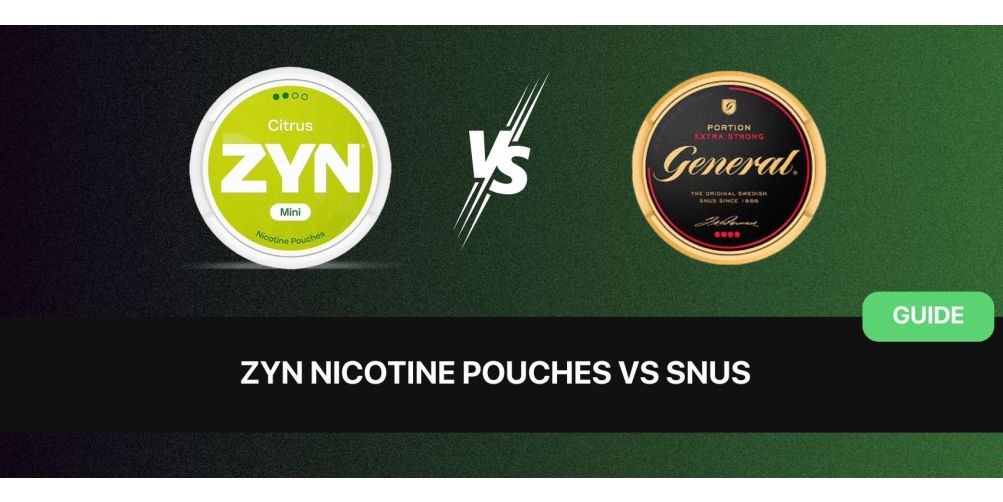
ZYN is a tobacco-free nicotine pouch, while Swedish snus is a pasteurized tobacco product. Both sit under the upper lip, but snus contains ground tobacco and can feel faster at first, while ZYN uses plant-based fibers and delivers nicotine steadily without tobacco leaf. Choose ZYN for spit-free, low-odor use and modern flavors. Choose snus for traditional tobacco taste and Swedish heritage.
Key terms (don't confuse these):
- Swedish snus: pasteurized tobacco placed under the upper lip; generally designed for spit-free use, though it produces more drip than nicotine pouches
- Nicotine pouches (ZYN, VELO, ON!): tobacco-free pouches containing nicotine extracted from tobacco combined with plant-based fibers
- American dip/chew: fermented tobacco placed under the lower lip; produces heavy drip and requires spitting; different product category from both snus and nicotine pouches
Table Of Contents
Quick Comparison: Snus vs ZYN at a Glance
|
Factor |
ZYN Nicotine Pouches |
Swedish Snus |
|
Tobacco Content |
Tobacco-free (plant-based fibers) |
Contains ground tobacco |
|
Nicotine Release |
Steady 30-60 min release |
Faster initial kick, shorter duration |
|
Drip/Moisture |
Minimal drip, spit-free |
More drip than pouches; some users prefer to spit |
|
Flavor Options |
10 varieties: mint, citrus, coffee |
Tobacco-forward with bergamot, mint, licorice |
|
Format |
4 formats: Slim, mini, dry, original |
4 types: Loose, original, white, moist portion |
|
Brand Examples |
ZYN (by Swedish Match) |
General, Ettan, Göteborgs Rapé, Camel Snus |
|
Storage |
Room temperature, approximately 1 year unopened |
Refrigerate, 3-5 months |
|
Price Range |
$4.00-$7.00 per can (varies by location) |
$2.40-$5.80 per can |
Is ZYN the Same as Snus?
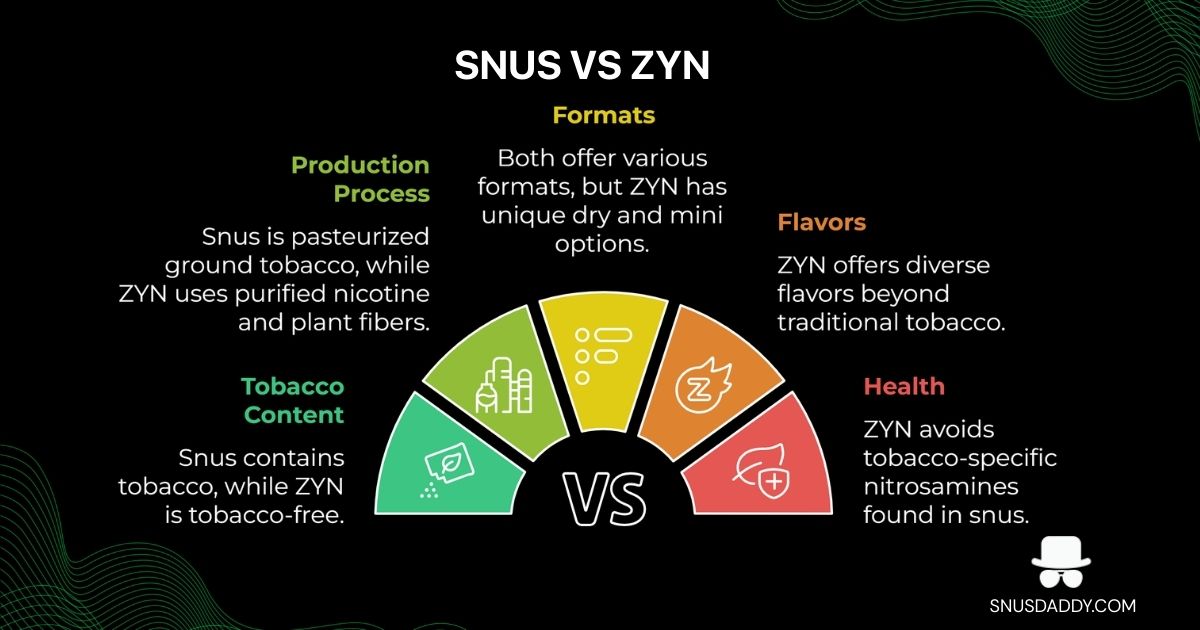
No, ZYN is tobacco-free while snus contains tobacco. ZYN Nicotine Pouches use nicotine extracted from tobacco combined with plant-based fibers, while snus uses pasteurized ground tobacco leaves processed at 80-100°C for 24-36 hours.
Swedish snus originated when Swedish farmers fermented tobacco for preservation in the 1700s. ZYN launched in the U.S. in 2014 through Swedish Match AB, representing modern innovation in tobacco-free nicotine delivery.
Major manufacturers include Swedish Match (ZYN producer), British American Tobacco (VELO), and Philip Morris International.
What Makes Snus Different?
Snus is a tobacco product with 300-year Swedish heritage. Traditional Swedish snus contains pasteurized ground tobacco, salt, water, and natural flavoring such as bergamot, mint, and licorice. The tobacco flavor dominates all varieties.
4 Different Snus Formats
- Form loose snus by hand for traditional Swedish experience
- Choose original portions for authentic tobacco flavor and higher moisture
- Select white portions for reduced drip and longer-lasting satisfaction
- Use slim portions for discreet placement under the upper lip
Popular Swedish snus brands include General Snus, Ettan, Göteborgs Rapé, Siberia, and Lundgrens, each offering distinct tobacco profiles and nicotine strengths from 8mg to 45mg per portion (total content, not absorbed amount). Snus for beginners typically start with white portions at lower nicotine levels before moving to stronger options.
How Snus is Made
Snus production involves grinding tobacco leaves, mixing with salt and water, then pasteurizing at 80-100°C for 24-36 hours. This process reduces microbial load and helps standardize the product while preserving tobacco's natural characteristics. The pasteurized tobacco is portioned into pouches or sold loose.
Swedish Match, British American Tobacco, and GN Tobacco maintain strict manufacturing standards, ensuring consistent nicotine content and flavor profiles across production batches. These manufacturers produce the best Swedish snus brands available today, each with distinct tobacco blends and strength options.
What Makes ZYN Different?
ZYN offers tobacco-free nicotine in 4 distinct formats. ZYN nicotine pouches contain zero tobacco, using plant-based fibers as the base material. Because ZYN contains no tobacco leaf, users avoid exposure to tobacco-specific nitrosamines (TSNAs) and other compounds found in snus.
4 ZYN Format Options
- Choose ZYN Slim for discreet use in professional settings
- Select ZYN Mini for compact portability and smaller portions
- Use ZYN Dry for virtually spit-free experience
- Pick ZYN Original for standard size with balanced moisture
10 ZYN Flavor Varieties
ZYN offers flavors beyond traditional tobacco:
- Mint varieties: Cool mint, Apple Mint
- Citrus options: Citrus, lemon, blood orange
- Coffee flavors: Espressino, cappuccino
- Unique blends: Northern Woods, violet licorice
This variety differentiates ZYN from tobacco-only snus options, giving users modern flavor experiences across the full World of ZYN lineup.
ZYN Production Process
ZYN extracts nicotine from tobacco plants but removes all tobacco plant material through pharmaceutical-grade purification. The purified nicotine combines with plant-based fibers, natural flavors including mint and citrus extracts, sweeteners such as acesulfame K, and pH stabilizers. This creates a tobacco-free product maintaining nicotine satisfaction.
Popular ZYN Picks for Snus Switchers
- ZYN Slim Apple Mint Extra Strong: An 11mg Apple mint pouch in slim format. Snus users switching from General White or Camel Frost won't feel a nicotine drop-off, and the cooling mint profile bridges familiar territory with ZYN's tobacco-free delivery.
- ZYN Mini Dry Cool Mint 3 mg: The entry-level pick that shows what makes ZYN different from snus. Compact, virtually drip-free, and designed for discreet use. A good starting point for users testing lower nicotine levels before committing to stronger options.
- ZYN Mini Black Cherry 6 mg: A customer favorite that sits between the 3mg and extra strong tiers. The extravagant cherry flavor is the kind of flavor traditional snus can't match, with enough nicotine to keep experienced users satisfied.
Camel Snus vs ZYN
Camel Snus is an American tobacco snus made by R.J. Reynolds; ZYN is a tobacco-free nicotine pouch made by Swedish Match. Both are popular in the U.S., but they differ in 4 ways that matter to buyers.
|
Factor |
Camel Snus |
ZYN |
|
Tobacco Content |
Contains pasteurized tobacco |
Tobacco-free (plant-based fibers + pharmaceutical-grade nicotine) |
|
Nicotine Per Pouch |
Regular: ~1.5mg / Large: ~2.5mg |
3mg and 6mg options |
|
Flavors |
5 flavors: Frost, Winterchill, Mellow, Mint, Robust (sweet tobacco base) |
10 varieties: mint, citrus, coffee, Northern Woods, violet licorice |
|
Availability |
U.S. convenience stores and gas stations only |
U.S. retail + international online retailers like Snusdaddy (50+ countries) |
|
Manufacturing Standard |
U.S. regulations (higher TSNA levels) |
Swedish Match quality standards |
Which Provides Better Nicotine Delivery?
Snus often feels faster because its higher moisture content allows nicotine to release quickly within 5-10 minutes. ZYN tends to feel steadier, delivering consistent nicotine across 30-60 minutes. Nicotine listed on the can is the total amount in the pouch - not the amount your body absorbs. Actual absorption depends on pH, moisture, placement, and individual saliva production.
ZYN provides controlled nicotine content, with the most common strengths being ZYN 3mg vs 6mg options clearly marked per portion. Swedish snus nicotine ranges from 8mg to 45mg per pouch depending on brand and format, though a lower percentage reaches the bloodstream compared to what's listed.
Both sit under the upper lip the same way, but snus produces more saliva and drip than ZYN, so some users prefer to spit. ZYN's cleaner, lower-drip design suits discreet use in offices, meetings, and social situations. Among tobacco-free brands, the main differences between ON! and ZYN come down to flavor range and strength options, not how nicotine reaches your system.
Health Considerations: Snus vs ZYN
Neither product is risk-free. Both contain addictive nicotine and can cause side effects like nausea or gum irritation. Because ZYN contains no tobacco leaf, it may reduce exposure to certain tobacco-specific compounds found in snus, including TSNAs and polycyclic aromatic hydrocarbons. This does not make ZYN safe - it means the risk profile differs from tobacco-containing products.
Traditional snus contains tobacco and associated compounds, though Swedish snus manufactured under the GothiaTek standard has lower TSNA levels compared to American smokeless tobacco due to stricter pasteurization and quality controls.
Critical health warnings:
- Both products contain nicotine and cause dependence
- Neither product should be used by minors under 21 or pregnant women
- These are nicotine alternatives, not risk-free products
- Consult healthcare providers before using nicotine products
FDA issued marketing granted orders for 20 ZYN products in January 2025 following scientific review. This authorization does not mean ZYN is safe or FDA-approved for smoking cessation.
This guide is informational and not medical advice. Consult a healthcare provider before using nicotine products.
Price Comparison and Availability
Snus costs less on average; ZYN sits mid-range for nicotine pouches. Swedish snus prices range from budget options like Lundgrens ($2.40 per can) to premium products such as Kurbits Stockholm ($5.80 per can). Camel Snus falls within a similar range at U.S. retail, typically $4.00-$5.00 per can at convenience stores.
ZYN costs $4.00-$7.00 per can (varies by retailer and location), reflecting positioning as a premium tobacco-free product. Other nicotine pouches sit in a similar range, with the price gap between VELO and ZYN being minimal across most retailers.
Availability differences:
- Snus faces EU sales restrictions except in Sweden
- Nicotine pouches as a category - including ZYN, VELO, and ON! - have broader international market access than traditional snus
- Camel Snus is available only in the U.S. retail market
- U.S. availability varies by state and local tobacco regulations
- Online purchasing depends on regional import laws
Prices current as of March 2026. Pricing varies by retailer, region, and order size.
When to Choose ZYN vs Snus
Choose ZYN for:
- Tobacco-free nicotine experience
- Spit-free, discreet use in professional settings
- Modern flavor variety including mint, citrus, and coffee
- Consistent 30-60 minute nicotine release
- White portions that won't stain teeth
Choose snus for:
- Authentic tobacco flavor and Swedish tradition
- Faster initial nicotine satisfaction within 5-10 minutes
- Lower-cost options starting at $2.40 per can
- 300-year Swedish heritage and craftsmanship
- Traditional smokeless tobacco experience
Snus vs ZYN FAQs
Is ZYN safer than snus?
ZYN carries fewer tobacco-related risks than snus because it contains no tobacco leaf. Without tobacco, ZYN reduces user exposure to tobacco-specific nitrosamines (TSNAs) and polycyclic aromatic hydrocarbons. Both products deliver addictive nicotine, and neither is risk-free.
How do snus and ZYN affect your health?
Both products contain addictive nicotine. ZYN reduces exposure to tobacco-specific compounds because it contains no tobacco leaf, stems, or dust. Snus exposes users to TSNAs and other tobacco chemicals, though pasteurization lowers their levels compared to American smokeless tobacco.
What are the side effects of ZYN vs snus?
Both products cause nicotine dependence. ZYN users report gum irritation, dry mouth, and nausea. Snus users report gum recession, tooth discoloration, and increased saliva production. Neither product is risk-free. Minors and pregnant women should avoid both.
Is ZYN better for quitting smoking than snus?
ZYN offers advantages for transitioning smokers: tobacco-free design, consistent nicotine delivery, and a clean flavor profile without tobacco taste. Its spit-free, discreet format works in offices and social settings where smoking and spitting are not practical. Neither product holds FDA cessation approval.
What is the difference between snus and nicotine pouches?
Snus contains pasteurized ground tobacco. Nicotine pouches use plant-based fibers with extracted nicotine and zero tobacco. ZYN, VELO, ON!, and LOOP are nicotine pouch brands. General, Ettan, and Göteborgs Rapé are snus brands. Nicotine pouches avoid TSNAs and produce less drip than snus.
How does Camel Snus compare to ZYN?
Camel Snus contains tobacco and delivers ~1.5-2.5mg nicotine per pouch across 5 flavors. ZYN is tobacco-free and delivers 3-6mg per pouch across 10 flavors. ZYN provides stronger, more consistent nicotine without tobacco compounds. Camel Snus sells only in U.S. stores; ZYN ships internationally.
Is ZYN considered a snus product?
No. ZYN is a nicotine pouch, not snus. Snus contains pasteurized ground tobacco leaves by definition. ZYN Ingredients include plant-based fibers and pharmaceutical-grade nicotine with zero tobacco. Both sit under the upper lip, but they belong to different product categories.
